
Satellites live on tight margins. They juggle limited power, brutal temperature swings, vibration at launch, and vacuum for years. Instrumentation has to keep working through all of it, often without a second chance. That pressure pushes designers toward components that do one job extremely well: convert electrical command into mechanical motion, fast and predictably.
Solenoids fit that role. They turn a pulse of current into force and motion inside a compact package. Engineers use that motion to latch, release, pinch, block, switch, and meter all kinds of mechanisms that support sensors and scientific payloads. Below are the most common ways satellite instrumentation leans on solenoids, from deployment hardware to fluid handling and thermal management.
1. Pop, Lock, and Deploy: Releasing Instrument Hardware
Launch vehicles treat anything that can move as a liability, so teams clamp down on deployable structures. A satellite can carry antennas, booms, baffles, sunshades, and instrument covers in a tightly stowed configuration. After separation, the spacecraft needs clean, reliable releases that work in a vacuum and tolerate shock.
Solenoids often drive those releases through pin pullers, bolt release mechanisms, or latch triggers. The payload team sends a command, the solenoid pulls or pushes a plunger, and the mechanism frees a hinge or spring-loaded element. Designers like the simplicity: one electrical line, one motion, one outcome.
Teams also use solenoids to close the loop after deployment. A latch can capture a boom at full extension, and a solenoid can drive that latch into its final detent. That final lock reduces jitter and protects pointing stability, which matters when an instrument needs arcsecond-level accuracy.
2. Dust Covers and Shutters: Protecting Sensitive Optics
Optical payloads hate contamination. A thin film on a lens or mirror can cut throughput, raise stray light, and blur images. Ground handling introduces dust and outgassing residues. Launch adds particulates and vibration. Engineers often give instruments a protective door or aperture cover that stays closed until orbit operations begin.
Solenoids can actuate small shutters and doors when a payload controller schedules first-light activities. The solenoid supplies the force that overcomes stiction and spring preload, and the door swings clear. Engineers also design for a clean separation between the instrument cavity and the external environment. A well-designed solenoid-driven latch can hold a door shut against launch loads, then release cleanly in orbit without scraping seals.
Some instruments also use internal shutters for calibration sequences. A shutter can block light so the detector can measure dark current or take flat-field references. A solenoid can move that shutter quickly and repeatedly, which helps during commissioning and periodic health checks.
3. Propellant Discipline: Metering Fluids With Solenoid Valves
Satellites move fluids for propulsion, pressurization, and sometimes payload-specific systems. Even when the payload does not “use fuel,” the spacecraft still manages propellant lines, pressurant gas lines, and vent paths that keep the vehicle safe and stable. That’s where solenoid valves show up.
A solenoid valve lets avionics command a line open or closed on demand. Thruster manifolds, tank isolation, and pressurant regulation frequently rely on solenoid-actuated valves to control when fluids move. Instrumentation benefits from that control in several ways. First, better attitude control improves pointing, and tighter pointing helps sensors collect cleaner data. Second, careful valve timing reduces vibration and impulse noise during sensitive measurement windows. Third, controlled venting prevents plume impingement that could contaminate optical surfaces.
Design teams pay close attention to coil power, magnetic force margin, and sealing geometry. In a vacuum, lubricant choices shrink, and thermal gradients grow. A valve that sticks can derail a maneuver plan, so engineers put a premium on repeatable actuation and a predictable force stroke across the full temperature range.
4. Heat on a Leash: Thermal Control and Instrument Stability
Many sensors demand a narrow temperature band. Infrared detectors, frequency references, and precision oscillators all drift when temperatures swing. Spacecraft thermal engineers fight that drift with heaters, heat pipes, radiators, and sometimes fluid-based thermal loops on larger platforms.
Solenoids can support thermal control when a system needs a mechanical action, not just heat input. Some designs use solenoid-actuated valves to route fluid through different paths, which changes heat rejection or heat pickup. Others use solenoid-driven mechanisms to open or close louvers or shutters that regulate radiator exposure. When a payload needs stable temperature during an eclipse transition, a fast mechanical change can complement slower thermal mass behavior.
Instrument teams also use solenoids to manage purge paths and venting during warmup and cooldown. A controlled vent can reduce pressure differentials across delicate windows or housings, which protects alignment and sealing interfaces.
5. Tiny Motions, Big Impact: Calibration Targets and Filter Wheels
Calibration keeps data honest. Instruments often need periodic reference points that verify alignment, sensitivity, or spectral response. Payloads accomplish that with mechanisms like filter wheels, calibration lamps, blackbody targets, or reference shutters.
Solenoids can drive a detent, release a lock, or move a small target into the optical path. Engineers often pair a solenoid with a spring and a hard stop. The solenoid releases a latch, the spring moves the target, and the stop defines position. That arrangement gives repeatable placement without demanding a complex motor controller.
A solenoid can also act as a “kick” actuator to start motion. Filter wheels sometimes need a brief impulse to break static friction before a motor takes over. The solenoid delivers that impulse quickly, and the motor then handles smooth rotation. That hybrid approach can reduce motor size and lower continuous power draw during cruise operations.

6. Switch With Confidence: Waveguide and RF Path Actuation
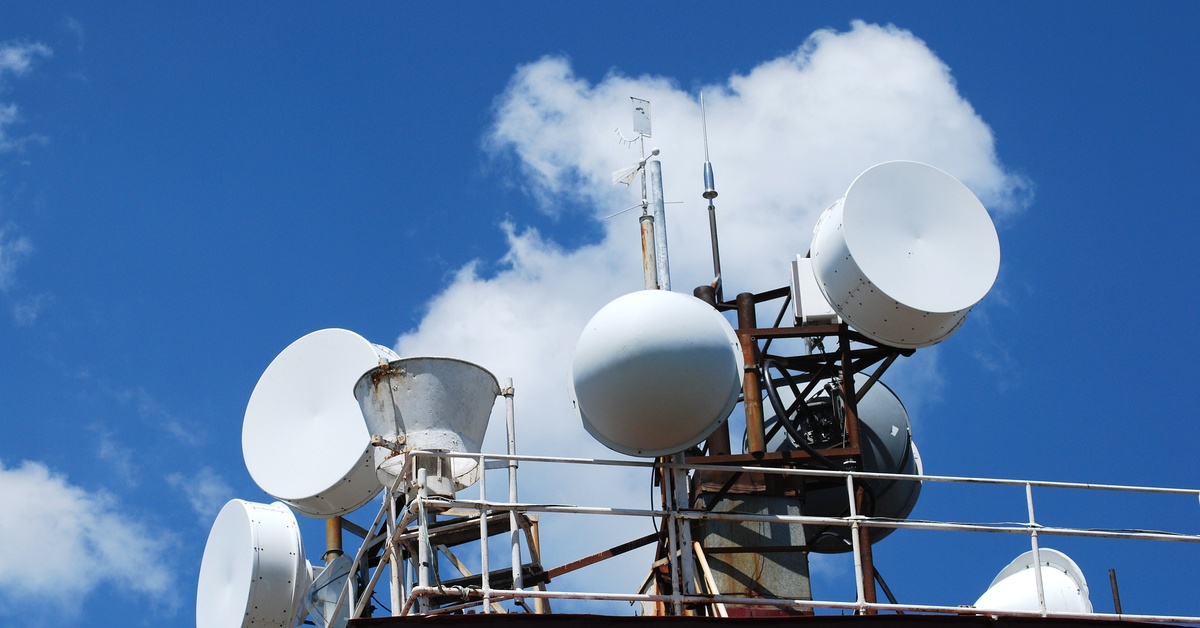
Satellites route radio-frequency signals through waveguides, couplers, and switches. Communication payloads and some scientific instruments need reliable switching between redundant chains or between antennas. Mechanical RF switches can outperform purely solid-state options in certain bands and power levels, and they can limit insertion loss when performance matters.
Solenoids can actuate those switches. A solenoid moves a plunger that toggles a waveguide vane or a coaxial contact. The command sequence stays simple, and the switch action completes quickly. That speed matters when a spacecraft needs to swap chains after a fault or reconfigure antennas for a different mission phase.
Engineers also value the clear state change. A mechanical switch provides a physical contact position that teams can verify with sensors, and that verification supports fault management logic. The spacecraft can confirm the selected RF path and avoid ambiguous configurations that could degrade telemetry or science downlink.
7. Safety by Design: Redundancy, Safing, and One-Time Actions
Space systems assume failure can happen, and they plan around it. Instrumentation often rides on redundant electronics, redundant heaters, and redundant communication paths. Mechanical actions need the same mindset. Solenoids support redundancy strategies because they can act as simple, independent actuators that respond to a direct electrical command.
Teams use solenoids in safing actions like closing isolation points, triggering a latch that protects a sensitive component, or switching a mechanism into a fail-safe state. They also use solenoids for one-time actions, such as releasing a hold-down, firing a cutter, or clearing a contamination cover. Those one-time actions demand predictable force and clean separation. Solenoid designs can deliver that predictability when engineers match coil design, magnetic circuit geometry, and mechanical tolerances to the environment.
Designers also factor in fault containment. A solenoid-driven mechanism can isolate a subsystem without relying on complex software logic. That isolation can protect a payload from cascading faults and preserve mission value, even when the spacecraft operates in a degraded mode.
The Quiet Muscle Behind Clean Data
A spacecraft can carry world-class sensors and still struggle to deliver great data if it can’t control motion, heat, and configuration. Solenoids give satellite instrumentation a dependable way to translate commands into physical outcomes. They release deployables, protect optics, stabilize thermal paths, support calibration routines, and manage fluid and RF routing when mission phases change.
That “quiet muscle” rarely gets headline attention, but it shapes the difference between noisy measurements and crisp, repeatable results. When teams treat solenoid selection as part of system design, not a last-minute part choice, they build instruments that behave predictably from first light through end of life.