
If you work in industrial design or manufacturing, you know that control is everything. Whether you are managing the precise flow of medical reagents or regulating fuel in an aerospace engine, the difference between success and failure often comes down to how effectively you can start, stop, and meter fluid flow. This process is where the solenoid valve steps in—a critical component that serves as the heartbeat of modern fluid dispensing systems.
A solenoid valve is an electromechanical valve. It uses an electric current to generate a magnetic field, which moves a plunger to either open or close the valve. While the concept sounds simple, the implications for system performance are massive. Without these valves, achieving the level of automation, precision, and reliability required in today’s industries would be impossible. Keep reading to explore why solenoid valves are crucial in flue dispensing systems.
Key Advantages of Using Solenoid Valves in Fluid Dispensing
Engineers and system designers choose solenoid valves because they offer specific benefits that other valve types cannot match.
Precision and Accuracy
In fluid dispensing, “close enough” is rarely good enough. Solenoid valves offer exceptional repeatability. If you need to dispense exactly five milliliters of fluid every three seconds, a high-quality solenoid valve can hit that mark consistently over thousands of cycles. This precision is non-negotiable in sectors like pharmaceuticals, where dosage accuracy is critical.
Speed and Responsiveness
As mentioned, electromagnetic actuation enables near-instant response times. This responsiveness is crucial for automated systems. A delay of even a few milliseconds can disrupt a production line or cause a chemical reaction to fail.
Reliability and Durability
Solenoid valves have fewer moving parts than other mechanical valves. This simplicity translates to longevity. With proper maintenance and correct specification, these valves can operate for millions of cycles without failure, reducing downtime and maintenance costs for operators.
Compact Size and Integration
Space is often at a premium in modern machinery. Solenoid valves are generally compact and lightweight, making them easy to integrate into complex manifolds or tight spaces within a device. Their electrical operation also enables seamless integration with modern PLCs (Programmable Logic Controllers) and IoT systems.

Applications of Solenoid Valves in Various Industries
The versatility of solenoid technology means you will find it working behind the scenes in almost every major industry.
Medical Devices and Healthcare
In the medical field, precision saves lives. Solenoid valves control the flow of oxygen in ventilators, manage fluid delivery in dialysis machines, and regulate reagents in automated blood analyzers. Here, the valves must be biocompatible and capable of handling sensitive fluids without contamination.
Industrial Automation
From robotic glue dispensing on an assembly line to filling beverage bottles, industrial automation relies heavily on these valves. They provide the high-speed switching required to keep up with mass-production rates while maintaining consistent quality.
Automotive Industry
Modern vehicles contain loads of solenoid valves. They control fuel injection systems, manage transmission fluid pressure, and regulate exhaust gas recirculation (EGR) to reduce emissions. The shift toward electric vehicles (EVs) has also created new applications in battery cooling systems.
Aerospace and Defense
In these sectors, failure is not an option. Solenoid valves manage fuel flow in thrusters, control hydraulic systems in landing gear, and assist in environmental control systems within aircraft cabins. These valves must withstand extreme temperatures and vibration.
Water Management Systems
Water solenoid valves are ubiquitous in both commercial and residential settings. You see them in automated irrigation systems, smart faucets that reduce water waste, and industrial water treatment plants where flow requires strict regulations based on sensor data.
Customization and Innovation in Solenoid Valve Technology
While off-the-shelf valves work for general applications, many high-performance systems run into limitations with standard components. A generic valve might not handle a specific corrosive fluid, fit into a unique geometric space, or meet a strict power consumption requirement. This reason is where tailored solutions become essential.
Solenoid Systems specializes in bridging this gap. We develop custom solenoids and valves that outperform off-the-shelf compromises. For example, if a standard valve consumes too much power for a portable medical device, a custom solution can optimize the magnetic circuit to reduce energy draw without sacrificing force.
The Value of a Design Partner
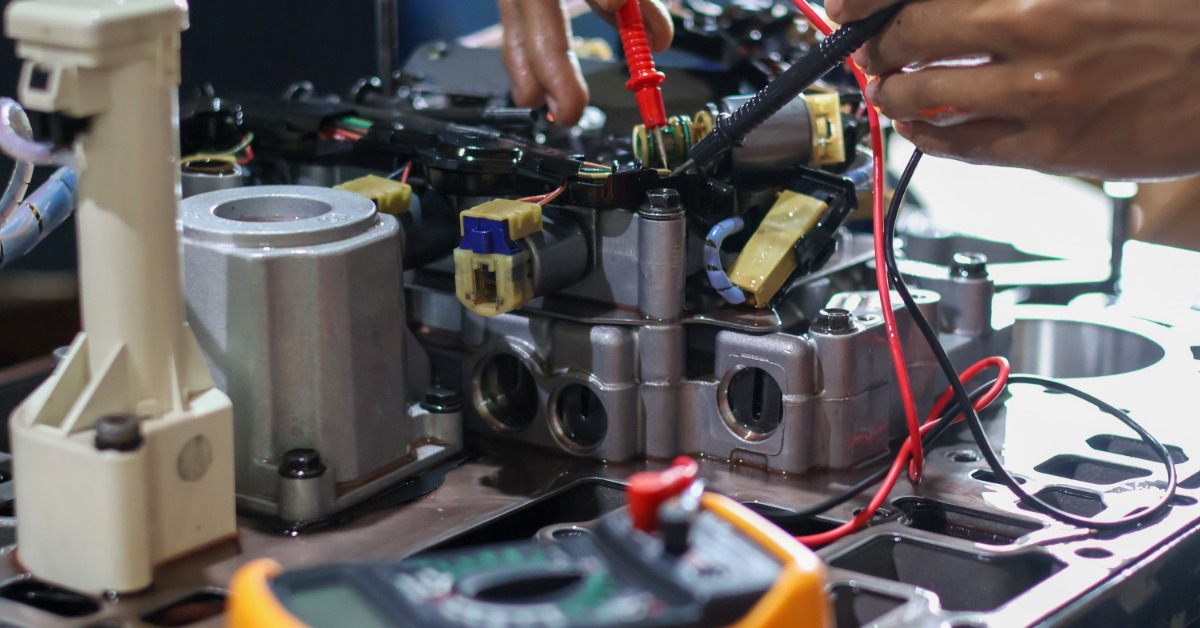
Working with a partner like Solenoid Systems gives you access to a dedicated design and development resource. We act as an extension of your engineering team. Through our Virtual Development Platform, we use advanced simulation technologies to model valve performance before cutting a single piece of metal.
Innovative Applications
Customization drives innovation. We have seen this in the positioning of satellite instrumentation in space, where standard valves would fail due to outgassing or extreme temperatures. In the medical field, we drive the development of new, advanced procedures by creating microvalves that enable less-invasive surgical tools. By tailoring the component to the exact need, we unlock possibilities that standard catalogs simply don’t offer.
Factors To Consider When Choosing a Solenoid Valve
Selecting the right valve involves more than just picking a size. To guarantee performance, you must evaluate several critical factors.
Material Compatibility
The valve body and seal materials must resist the fluid they control. For instance, stainless steel and PTFE (Teflon) might be necessary for aggressive chemicals, while brass and NBR (Nitrile rubber) might suffice for air or inert gases. Incompatible materials lead to corrosion, leaks, and system failure.
Pressure and Temperature
You must know the system’s operating pressure range. Some valves require a minimum pressure differential to operate (pilot-operated), while others work from zero pressure (direct-acting). Similarly, the valve must withstand the fluid temperature and the ambient environment, especially in aerospace or automotive applications.
Voltage and Power Consumption
Solenoid coils come in various voltages. You also need to consider power consumption. For battery-operated devices, you might need a latching solenoid that only uses power to switch states, rather than continuous power to hold a position.
Valve Size and Connection
Flow rate requirements dictate the orifice size and the valve’s flow coefficient. Undersizing a valve creates a bottleneck, while oversizing adds unnecessary cost and weight. You also need to verify that the port connection type (NPT, BSP, or flange) matches your piping system.
Final Thoughts
Solenoid valves remain unsung heroes of modern engineering, providing the crucial link between electronic control systems and fluid movement. Their ability to deliver precision, speed, and reliability is essential to the success of today’s technology, from saving lives in a hospital to steering satellites in orbit.
At Solenoid Systems, we understand that the most demanding applications often require more than an off-the-shelf solution. That’s why we combine expert engineering, advanced manufacturing capabilities, and cutting-edge virtual development tools to design custom solutions for even the most complex challenges. By choosing a dedicated partner like Solenoid Systems, you ensure that your fluid dispensing system achieves peak performance, no matter the application.