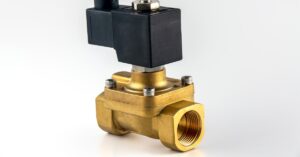

Solenoid valves rarely fail from a single flaw because multiple stress factors accumulate across installation, power quality, media cleanliness, and material compatibility. Mechanical distortion, voltage fluctuation, and contaminated fluid gradually erode reliability until coil degradation, plunger sticking, or corrosion interrupts performance.
Longevity comes from the way a valve interacts with its operating environment rather than from the component alone. Therefore, extending service life requires looking beyond product specifications to the practical mechanical, electrical, and environmental conditions that determine long-term performance.
Start With Mechanical Integrity, Not Just Fit
A solenoid valve can fit into a line without difficulty, yet the installation may still be incorrect. Misalignment during assembly introduces internal stress that warps clearances and shifts sealing surfaces over time. A valve that sits a few degrees off-center in piping can bind the plunger as it travels, wearing down the tube and creating performance instability long before the coil itself shows any signs of failure.
The solution begins with intentional support. Use brackets or fixed mounting points to eliminate movement from adjacent tubing. Your support must relieve all off-axis strain at the ports so the valve housing carries only its internal load.
Apply Torque With Awareness of Materials
Torque values exist for a reason. Excessive compression of fittings deforms threads, crushes elastomer seals, collapses delicate internals, and creates unpredictable thermal expansion paths. Engineers often tighten with the assumption that more equals better, but with composite or soft alloy housings, extra force causes permanent mechanical shifts that change how the valve seals under pressure.
On the other hand, under-tightening leaves room for vibration. Micro-movements caused by insufficient torque gradually loosen fittings, misalign flow paths, and allow moisture to creep in between housing sections. A valve that starts with inconsistent torque won’t hold calibration, and over time, even the plunger movement becomes inconsistent due to shifting backpressure. Applying the correct torque keeps every component in its designated position and preserves internal symmetry under real-world cycling.
Protect the Internal Surfaces With Clean, Filtered Media

Contaminants don’t need to be visible to cause damage. Sub-micron particles suspended in gas or liquid can etch the surface of a plunger tube or seat just enough to disturb sealing and actuation accuracy. Once turbulence develops inside the flow path, the valve compensates by increasing force or duration.
Managing fluid and air quality remains one of the most overlooked ways to extend the lifespan of your solenoid valve. Particles suspended in media erode internal surfaces, scratch plungers, and cause uneven wear along sealing points.
In pneumatic applications, even low levels of humidity or oil mist produce corrosion inside the actuator tube and increase magnetic drag. In liquid systems, unfiltered solids wedge into orifices or react chemically with internal materials, reducing cycle consistency and actuation speed. Designing a filtration system that matches media composition, flow rate, and required tolerances preserves valve performance under continuous load.
Regulate Voltage and Power Supply Behavior
Electrical reliability begins with stable voltage. Coils depend on magnetic force to move the plunger across a defined air gap, and that force drops sharply if voltage fluctuates. A slight undervoltage may not seem critical during a brief cycle, but it causes the coil to remain energized longer to complete the pull-in. Long energizing periods raise the temperature inside the coil and begin a slow degradation of the insulation and magnetic responsiveness.
Stable voltage within the specified range helps to extend the lifespan of your solenoid valve by reducing thermal stress and magnetic inefficiency. Overvoltage accelerates current beyond the winding’s rating, overpowers the return spring, and forces movement beyond designed tolerances. Coils run hotter, pull in too aggressively, and lose efficiency with each cycle.
Regulated power supplies with proper snubbing or flyback protection provide the consistency coils need to function without drift. When power matches design parameters, the valve doesn’t need to compensate for external electrical instability and its components last longer as a result.
Size Valves for Flow Dynamics, Not Just Connection Type
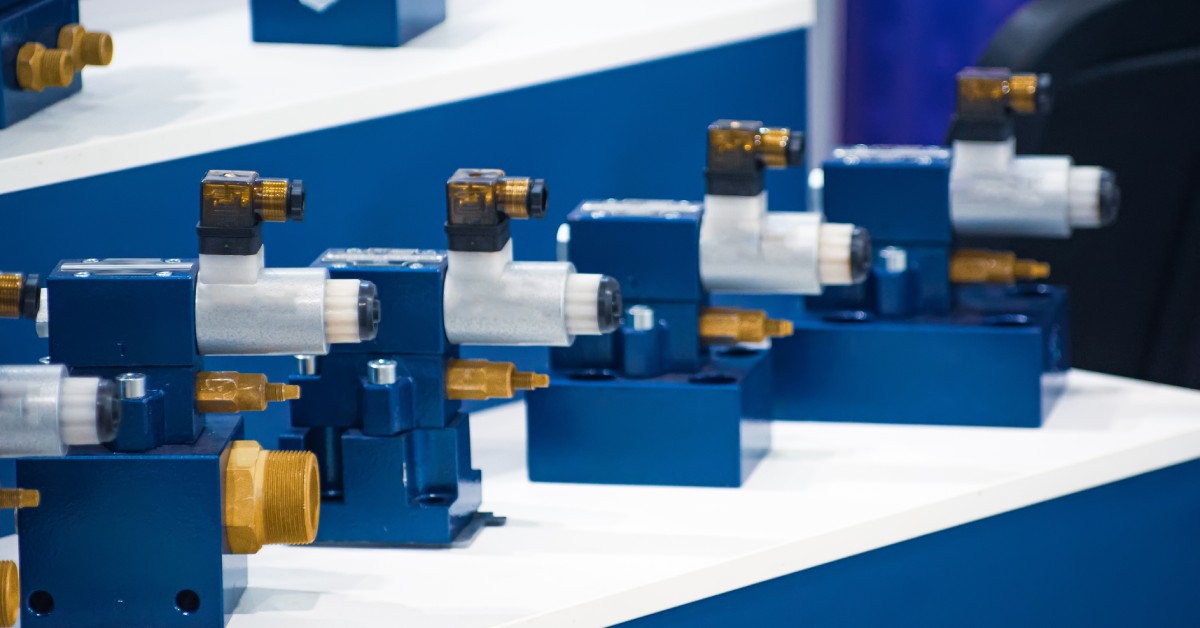
Flow restriction or excessive velocity can cause stress inside the valve. Undersized valves increase turbulence and pressure differential, which forces seals to seat harder and raises the magnetic load on the coil. Oversized valves introduce overshoot, cycle more frequently than necessary, and wear through mechanical components at a faster rate.
Use flow coefficient (Cv) calculations that reflect real operating pressure, expected cycle frequency, and media characteristics. When your system includes pulsed or modulated operation, consider how the internal volume of the valve interacts with signal response.
At Solenoid Systems, we supply proportional solenoids that give engineers control over flow precision while supporting extended cycle life in high-demand environments. Sizing based on performance requirements rather than connection type improves reliability, reduces unnecessary cycling, and extends component longevity.
Align Duty Cycle Expectations With Thermal Design
Solenoids differ in how long they can remain energized before heat buildup exceeds safe levels. Continuous-duty models tolerate sustained current, but only when heat can dissipate into the surrounding air or structure.
Intermittent-duty coils require downtime between activations. Ignoring recovery periods warps the coil form, softens insulation, and affects the next cycle.
Choosing a continuous-duty coil in a high-frequency system without verifying ambient temperature often leads to failure anyway. Heat soak increases coil resistance, reduces magnetic force, and forces longer activation to complete actuation.
The thermal cycle undermines lifespan even when coil ratings appear adequate. A better approach involves modeling the real energization curve under load and accounting for enclosure heat, airflow restriction, and cycling intervals.
Ensure Material Compatibility Between Solenoid and Media
Even if the system runs clean and stable, the wrong elastomer or metal alloy will quietly erode performance. Chemical swelling in seals, pitting of softer metals, and thermal distortion in plastics create slow, irreversible shifts in shape and fit.
While initial cycles may function without obvious failure, repeated exposure causes dimensional drift that weakens sealing, disrupts plunger travel, and introduces instability under temperature changes.
Match seals, plungers, tubes, and seats to the media’s chemical behavior and thermal demands. For high-pressure steam, reactive fluids, or aggressive solvents, material selection must account for both resistance and long-term dimensional control. Correct alignment between media and internal surfaces preserves sealing pressure, prevents chemical attack, and maintains actuator geometry throughout the full cycle range.
Design for the Installation Environment
Ambient heat, vibration, and external contaminants challenge every seal, connection, and mounting point. A valve designed for benchtop performance behaves differently when installed next to a motor housing, under a hood, or in an outdoor enclosure. Dust, road spray, or stray electromagnetic fields can alter how consistently the coil fires or how the seat responds to minor expansion.
Use IP-rated enclosures, shielded coils, or isolated mounts when installing valves into uncontrolled environments. If the solenoid must endure vibration or temperature swings, ensure your mounting design prevents fatigue on connectors or pins.
Plan for real-world conditions and make sure the system you build on paper survives in the field. Afterall, the best internal performance won’t matter if external factors ruin the operating environment.
When you address stress factors early, you build systems that stay calibrated, run cooler, and avoid breakdowns over extended cycles. If your equipment demands high-cycle reliability, contact Solenoid Systems today to get expert support, explore our full range of solenoids, or request a custom solution that fits your application.